Friday, November 30, 2018

Friday Blog: Week Four

This week I finished the book Wish by Melina Gerosa Bellows pages 141-280. Similarity to last week I did not find any words I was unfamiliar with so I once again decided to define word that had to do with autism.

Vocab:

Apraxia – A disorder of voluntary movement, consisting of partial or total incapacity to execute purposeful movements, without impairment of muscular power, sensibility and coordination. The person has difficulty sequencing movements in the service of a goal. May be specific to speech.

Developmental Delay – A child who acquires skills after the expected age in achieving cognitive, adaptive, physical, communication and social skills.

Expressive Language Disorder – Developmental expressive language disorder in which a child has lower-than normal proficiency in vocabulary, the production of complex sentences, and recall of words. Child will typically use gestures, words, and written symbols to communicate.

Hyperlexia – Is a condition in which the main characteristics are an above average ability to read accompanied with a blow average ability to understand spoken language.

Neurotypical (NT) – Is a neologism used to describe people whose neurological development and state are consistent with what most people would perceive as normal in their ability to process linguistic information and social cues. While originally coined among the autistic community as a label for non-autistic persons, the concept was later adopted by both the neurodiversity movement and the scientific community.

Self-Stimulatory Behavior – A term for behaviors whose primary purpose appears to be to stimulate ones own senses. An example is rocking ones body: Many people with autism report that some ‘self stims’ may serve a regulatory function for them (i.e., claming, adding concentration, shutting out an overwhelming sound.) Other examples: hand-flapping, toe walking, spinning, echolalia.

Sensory Integration – Is the ability to take in information through the senses of touch, movement, smell, taste, vision, and hearing, and to combine the resulting perceptions with prior information, memories, and knowledge already stored in the brain, in order to derive coherent meaning from processing the stimuli.

Behavior Support Plan/(BIP) Behavior Intervention Plan – Multi-component behavior intervention plans, with multiple layers of support, are in fact the best way to establish effective and comprehensive strategies for addressing challenging behavior.

Augmentative Communication – Special devise that provides an alternative for spoken language. For example, photographs and picture exchange communication.

Baylet Scales – A developmental assessment used for children age one month to 3 1/2 years old. It is comprised of a mental, motor and behavior scale. This scale has a mean of 100 and a standard deviation of 15.

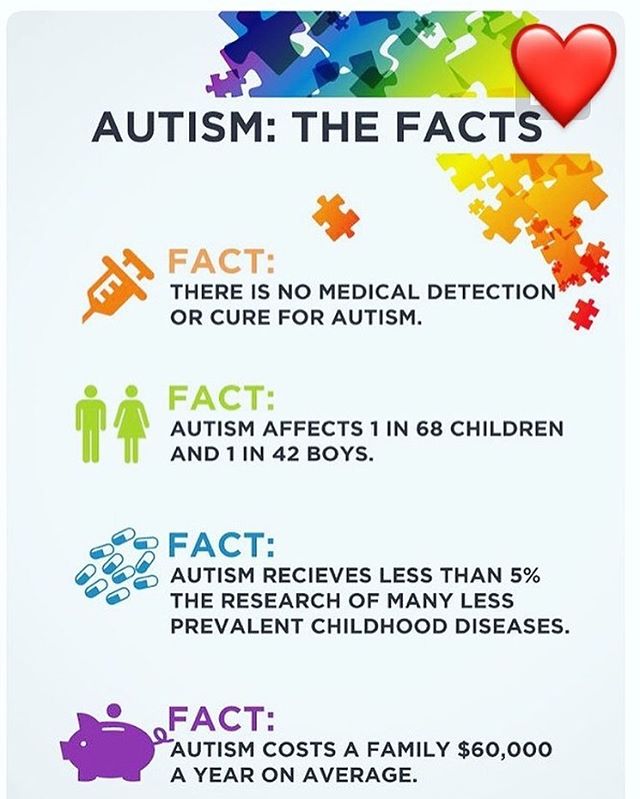
Image result for facts about autism
Source: infographicbee.com

Thursday, November 29, 2018

Thursday Blog: Week Four

As I come close to finishing the book Wish by Melina Gerosa Bellows I have decided to a character analysis of both Bella and Bobby, the main characters in the book. Bobby suffers from a more severe form of autism which affects him throughout his entire life. I have also decided to analyze Bella because her point of view shows what is like to grow up with a sibling who has autism. 


Bobby who was diagnosed with autism, somewhat accurately shows that hat it is like to suffer from severe autism. Some of Bobby’s main symptoms of his disorder are his sensory issues and his speech patterns of frequently quoting fictional characters. In terms of his sensory issues, Bobby suffers from extreme sensitivity to textures, lights, and sounds. For example, Bobby wears flannel to prevent any rough fabrics from bothering him. He also hates being touched even by his own family. When presented with one of these unpleasant stimuli, Bobby will often react by quoting a show he dislikes or an angry line said. On the flip side, when Bobby enjoys something he will quote a line from a show he likes. Many of Bobby's mannerisms line up with someone who has severe autism. Looking back at last weeks Friday Blog, many of the words are applicable to Bobby's situation.

Severe AutismA Gift of Sight: Visual Perception Treatment             for Autistic Children
Check out this powerpoint for more information

Bella, Bobby's twin sister who is neurotypical, an average girl who has very conflicting feelings about having a brother with autism. As the video I linked above mentions, siblings of people with autism describe their life as both rewarding and challenging. When they were younger, Bella perceived her brother at times to be a burden to her because she felt as if her brother was getting all the attention. As Bella grows up and becomes more mature she realizes how lucky she is to have Bobby in her life. For an example of Bella's change of heart, look at my Tuesday Blogs, weeks two and three to see how she has changed her mind. 

Source: pinimg.com


Tuesday, November 27, 2018

Wednseday Blog: Week Four

As I come close to finishing this book, became fascinated with a movie called Rain Man. This movie was originally brought up on page 142 when someone compared Bobby to the main character of the movie. In hopes to better understand Bobby as a character with autism, I decided to also watch Rain Man. Below I have included the trailer to the movie which was produced in 1988.


Tuesday Blog: Week Four

This Week I have continued reading the book Wish by Melina Gerosa Bellows. This book which follows Bella and her twin brother Bobby shows how aging affects both of them in all aspects of their lives. At this point in the book, Bella got engaged to a man who not only cares deeply for her but also cares for her brother. Her hopes are to one day be his full-time caretaker when her parents are too old to take care of him. Bella is then heartbroken when her fiance cheats on her and not only breaks her heart but also hurts Bobby due to how fond Bobby was of him. Years later it is revealed even though Bella and Joe called it off, Joe still visited Bobby and would take him places to do things he loved the most. Joe later died in an accident where at his funeral Bella and Bobby are reunited with an old friend who used to take Bobby for rides on his motorcycle, which was one of his favorite things to do. For old times sake, he takes Bobby on a motorcycle ride back to Bella's and Bobby's apartment. When they make it back to the apartment complex Bobby suffers from a stroke and is rushed to the hospital. After his stroke, Bella feels responsible because she let him go on the motorcycle. While in the waiting room Bella reflects back on her life.

Source: www.onecallmedicalalert.com

Quote:
"In some ways Bobby has always been like a Buddha, truthful, honest, living in the moment, without a shred of self-consciousness or malice. In a word, he was always himself. Instead of fixing him or changing him, or making him better, I might have simply accepted him, or at least accepted myself for my lifelong struggle to do just that"(278 Bellows)

Image result for autism facts
Source: www.autism-society.org

While Bella was growing up she always tried to hide her brother as if he was an embarrassment to her. Later in life, she now idolizes her brother and everything he goes through. She sees that he has great qualities and that he is always true to himself something Bella has never been. By saying this she is admitting she no longer envies the attention he got that she so craved when they were younger, rather that she envies the fact that he has always been himself and no one else. This quote in its context also shows how tragedy can bring forward truthfulness in people and in Bella's case it shows how much she truly loves her brother to spite his disorder.

In particular, this quote stood out to me because it shows the progression of maturity in Bella with respects to how she views her brother. One thing I have noticed growing up with my best friend and her younger brother is also her shift in attitude towards him. As I mentioned in my previous quote blog, when we were younger she felt as if she couldn't manage to get her parents attention causing her to envy her brother who seemed to have most of the attention. As time passed the feelings of envy changed to feelings of pride and protectiveness for her brother. Much like it took Bella years to see the positive sides of having a sibling with autism, is also took my friend a while. The second connection I have to this quote is an experience I had a few summers ago at the summer camp I worked at. In my group, I had a child with autism. Being responsible for a child with autism was at times very nerve-racking, for I had to be extra attentive to the child and their needs. Although at first, it was difficult for me, by the end of the summer I realized just how lucky I was to have them in my group.


Source: www.las.uk.net

Monday, November 26, 2018

Friday Blog: Week Three

This week I read Wish by Melina Gerosa Bellows pages 1-141. In my reading I did not come across any words I was unfamiliar with so instead I found a list of words and phrases that are key to know about Autism.

 Echolalia
This is the repeating of sounds, words, or phrases. People who “echo” may not always be able to communicate effectively or express their own thoughts, but they parrot back what they have heard. If asked a question, they might repeat the question, and not answer the question.

Scripting
The repetition of words, phrases, intonation, or sounds of the speech of others, sometimes taken from movies, but also sometimes taken from other sources such as favorite books or something someone else has said. Echolalia is sometimes referred to as scripting.

Perseveration
Repeating or persisting with an action or behavior after the stimulus that prompted it has ceased. To perseverate is to become stuck on something and to not be able to mentally shift gears.

Transition
A change from one environment or activity to another. Transitions can be hard for a person with autism. It sometimes helps if warnings are given before a transition.

Meltdown
Often mistaken as temper tantrums, meltdowns are common with people who have autism and are typically not anger-infused. Instead, it is the body’s way of reacting to a confusing or over-stimulating situation. Meltdowns can be loud or they can be very quiet.

Stimulatory behavior (Stimming)
Repetitive behavior, such as the spinning of objects, vocal echoes, or other repetitive actions, that people with autism commonly partake in to alleviate the stressors of overstimulation.

Elopement
To leave without permission or without letting others know where you are going, and without processing the dangers/risks involved in leaving. Elopement is a great concern in the autism community.

Savant
To have detailed knowledge in a specialized field. A small percentage of people with autism are savants. Savants may have many different skills not specific to one field.

Prosody
The rhythm and melody of spoken language. Prosody is shown in the rate, pitch, stress, inflection, and intonation used in our speech. People with autism have a harder time with intonation, and can often be more monotone or speak in a singing voice.

Comorbidity
The simultaneous presence of two chronic diseases or conditions in a patient. Many things are often comorbid with autism, including epilepsy and obsessive-compulsive disorder (OCD)

Sensory processing disorder (SPD)
A neurological condition that exists when sensory signals are not adequately processed in order to appropriately respond to the demands of the environment. For example, many people with sensory processing disorder are highly sensitive to fabrics and certain food textures.

How the terms and phrases relate back to the book...

To relate these terms back to the book, Bobby experiences many of these things. For example, Bobby can only wear flannel because he had a sensory processing disorder which makes him especially sensitive to rough fabrics. He also speaks in prosody and scripting by relaying quotes from shows and songs he likes and dislikes to express his emotions and mood. Bobby also suffers from epilepsy which is known as a comorbidity, the presence of two chronic conditions. Bobby's Autism is classified as severe which is explained in the diagram below. 


The Many Different Levels on the Spectrum
Source: discovermagazine.com

The words and definitions listed above are all from the website https://www.wrtsfranchise.com/autism-terms/ 

Tuesday, November 20, 2018

Tuesday Blog: Week Three

In the book Wish by Melina Gerosa Bellows the book follows both Bella and her brother Bobby. the book takes place through Bella’s and Bobby’s life which allows the reader to see who autism affects them throughout the years. the book begins in the year 1774 when they are about 8 years old at this time autism was not widely diagnosed and strange therapies where used for treatments. Although they are twins they are very different, Bobby suffers from severe autism and Bella, on the other hand, has very mild autism. Growing up Bella has felt as if she lived in the shadow of her brother, never getting the attention she desired from her parents. Bella is bullied for her brother's condition and for being overweight.

“As hard as I strive to achieve, I feel invisible to the members of my family” (Bellows 92).

At this point in the book, Bella reached her breaking point. She could no longer hold her emotions in and hide them from her family. She has always been a good student and has always looked out for her brother. The severity of her brother's autism takes a toll on Bella and her family which detracts from Bella’s accomplishments and hard work and places most attention and affection on Bobby. This quote shows Bella’s frustration with her situation. It’s not that envies her brothers disability and the attention he gets from it, she just desires to be seen and appreciated. This quote may seem as if she wants her brother to disappear, but that is in fact wrong. All her life she has “wished” for Bobby to get better hence the title of the book.

5 Tips for Brothers & Sisters


This quote stood out to me because I've heard the exact words said by my childhood friend. Growing up she was the oldest with a younger brother who suffered from autism. Although her parents tried their hardest to treat their children equally she always felt as if she was invisible to her parents. Being her best friend I saw how much this affected her. She would often tell me about how she wanted to just give up because no matter what she would never be noticed. Now that we are older I see how this affected her growing up and I now see how it has changed her overall. Although this invisibility to one's family is a negative thing it has taught her to be self-sufficient and she now is much more mature and understands why her brother needs the extra attention. All my time spent with her and her brother also had a similar effect on me and I feel as if it has added an extra sense of maturity to my life.

Source: https://slideplayer.com/slide/6228862/20/images/33/Impact+of+Autism+on+Siblings+Relationship.jpg


Friday, November 16, 2018

Friday Blog: Week Two

This week I read Marcelo in the Real World by Francisco X. Stork pages 148-312, finishing the book. While I was reading I came across a few words I was unfamiliar with.
Vocab: 
Aberration p.167 a departure from what is normal, usual, or expected, typically one that is unwelcome.
Contravene  p.182 violate the prohibition or order of (a law, treaty, or code of conduct).
Strewn p.223 scatter or spread (things) untidily over a surface or area.
Cajole p.235 persuade someone to do something by sustained coaxing or flattery.
Knoll p.246 a small hill or mound
Azure p.257 bright blue in color, like a cloudless sky.
Unabashed p.262 not embarrassed, disconcerted, or ashamed.
Indefatigable p.281 (of a person or their efforts) persisting tirelessly
Inchoate p.304 just begun and so not fully formed or developed; rudimentary.